Material Entanglement and Çatalhöyük
Inscribed on the UNESCO World Heritage List in 2012 and helping us understand cities and urban life since the 1960s, the Çatalhöyük excavation site is one of the oldest known settlements in history, once home to a population of around 5,000 to 8,000 people.
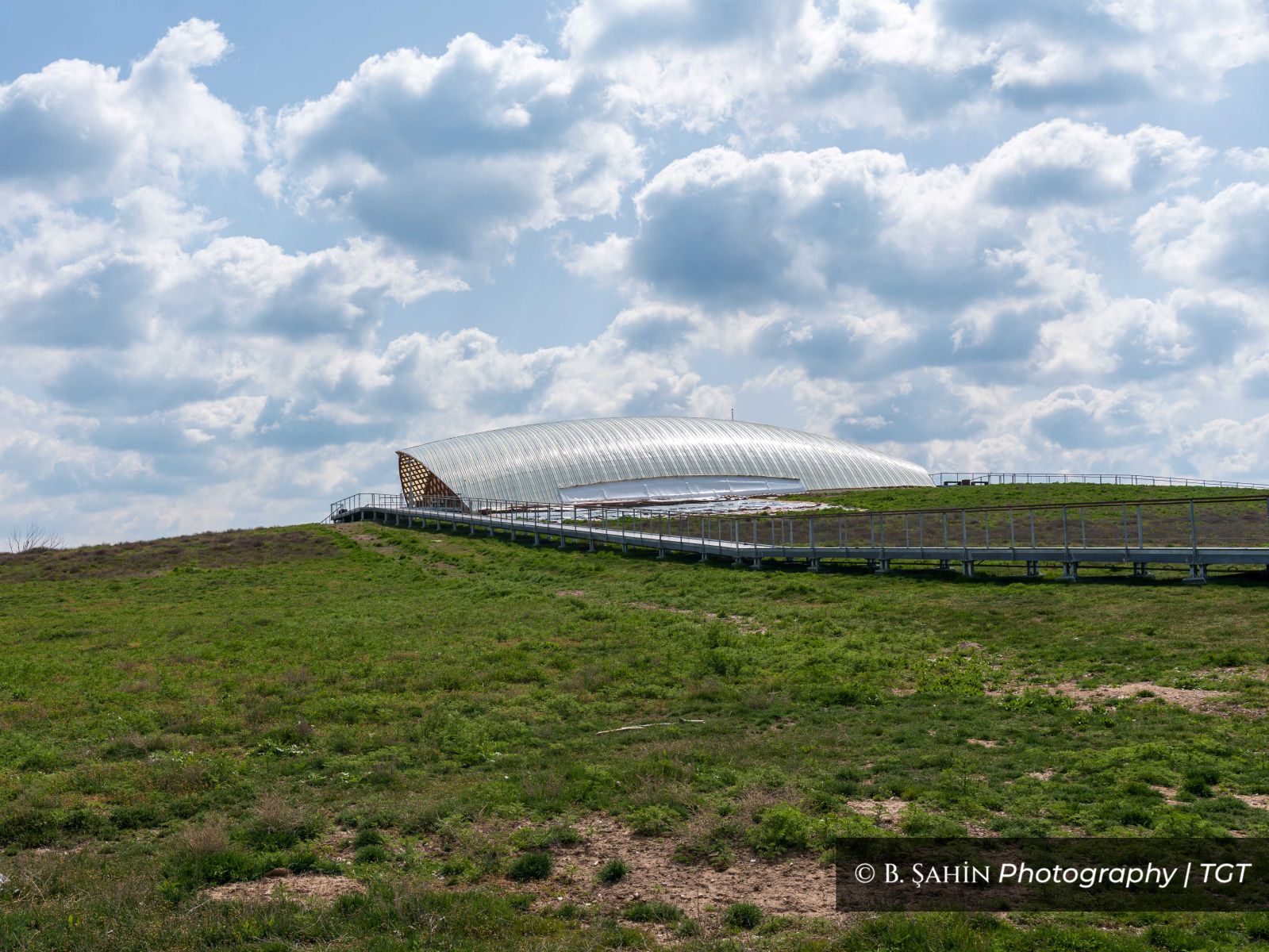
East Mound of Çatalhöyük April 2026
The name of this excavation site comes from the positioning of two distinct mounds resembling the pointed prongs of a fork. Excavations at this site, referred to as the East and West mounds, began in 1961 by James Mellaart and continue to this day. In the first year of excavations, a 39-day effort uncovered 40 different Neolithic mudbrick houses; the artifacts discovered inside these houses have helped us understand how humanity's concept of 'home' has been shaped throughout history.
These early houses were built using mudbrick, obtained by mixing locally sourced clay with straw. The houses were built adjacent to one another, sharing common walls; in this settlement where the concept of streets had not yet formed, people moved around across the flat roofs. One of the most characteristic features of Çatalhöyük is that the entrance doors to the houses were located on the roofs, and people entered and exited using a wooden ladder. Positioned directly below this entrance opening was a fire pit used as a hearth and heating system.
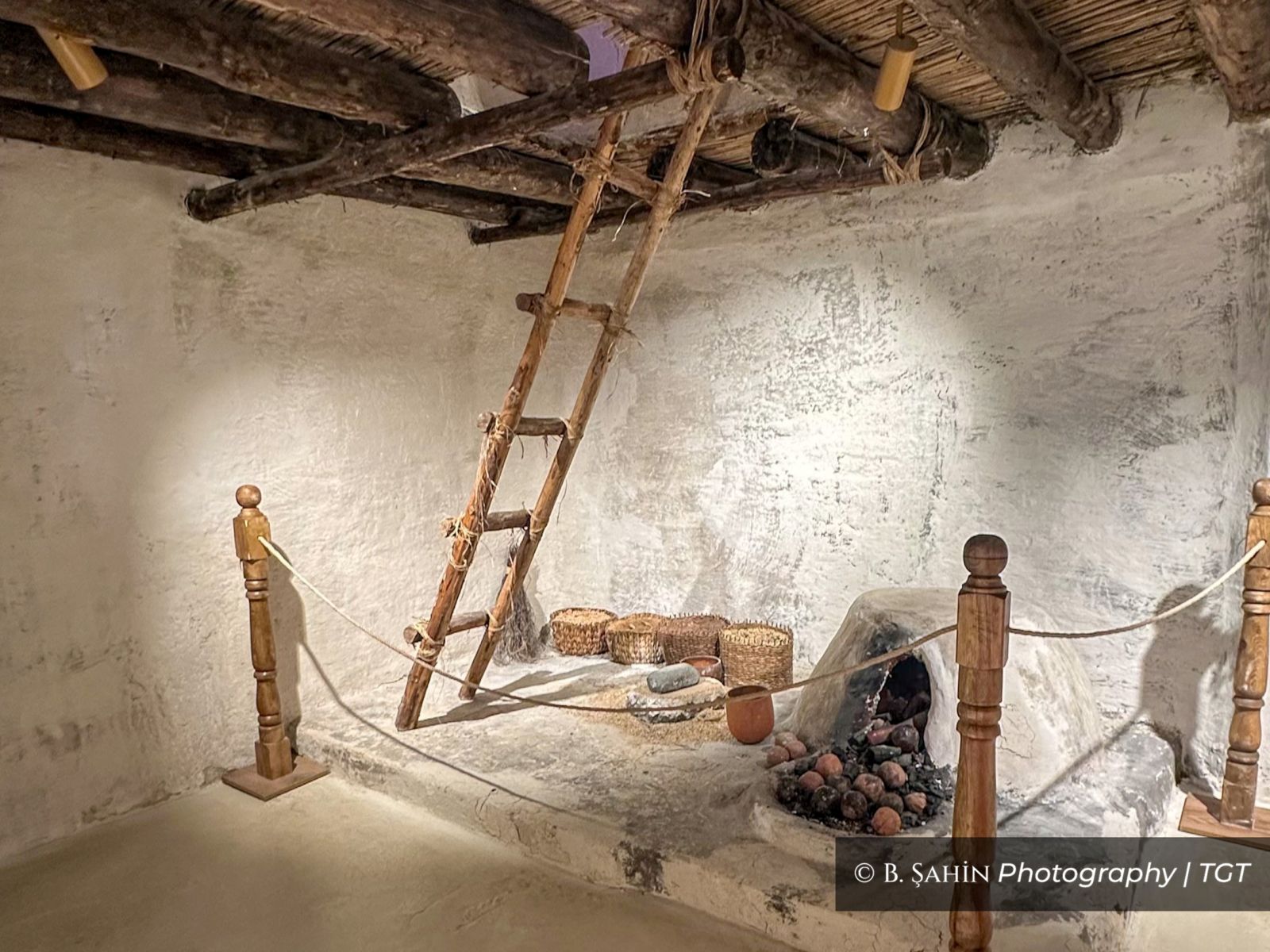
Reconstructed Neolithic house interior at Çatalhöyük showing the wooden ladder entrance from the roof and the hearth.
This never-ending necessity and cause-and-effect relationship is explained by the 'Material Entanglement' theory of Archaeologist Ian Hodder, who served as the site's excavation director for 25 years. According to this theory: Mankind has had to specialize in various fields over time because the tools and objects invented to facilitate daily life are not perfect. This specialization accelerated the transition from villages to cities and laid the foundations of civilization. As this relationship between humans and objects grew more complex, civilization continued to develop.
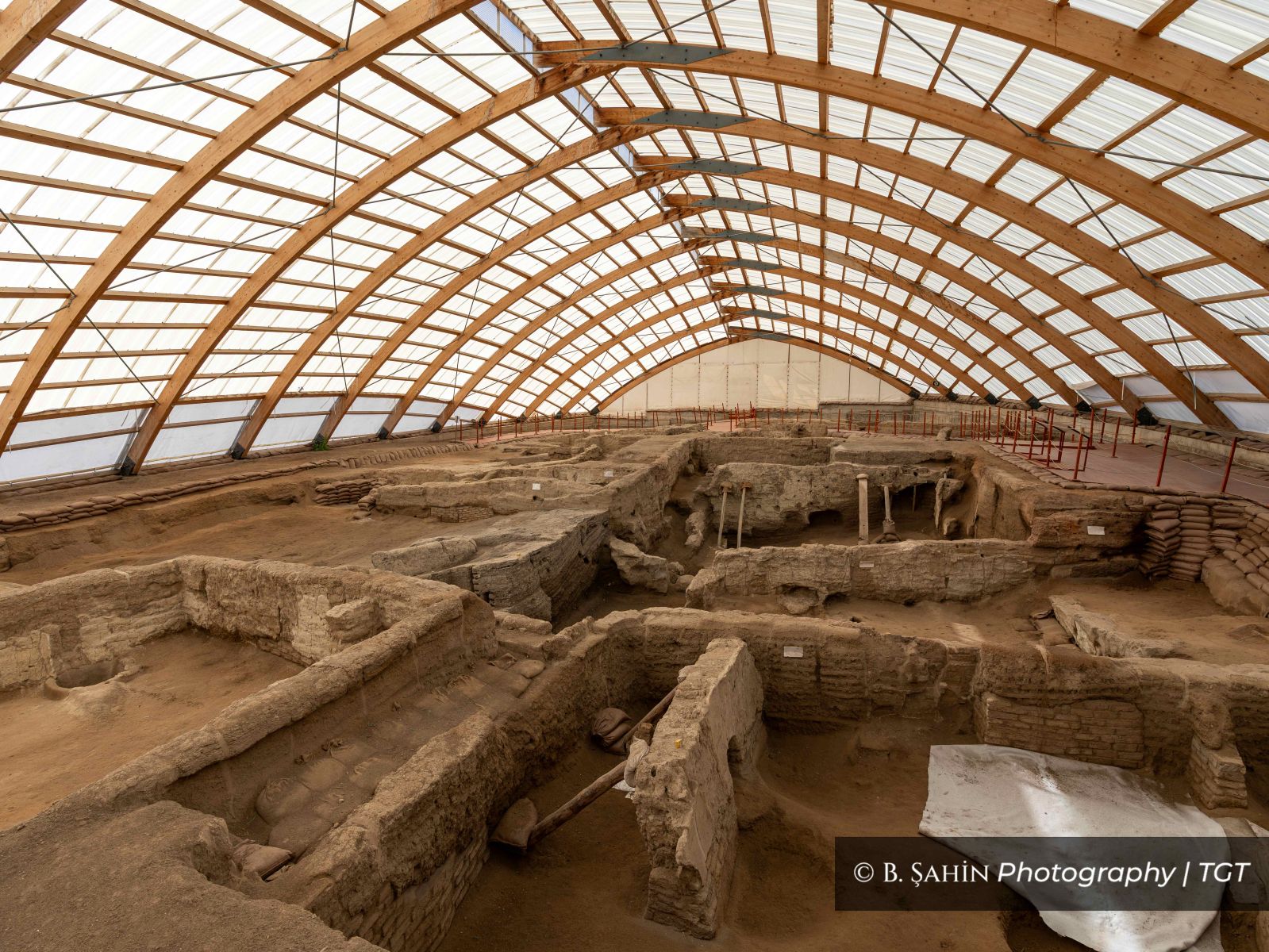
Wide angle view of the Çatalhöyük Neolithic excavation site under a protective wooden roof.
For example, an individual who has to walk 10 km a day buys a bicycle to cover this distance faster. Although this solution initially saves time, the malfunctions the bicycle will eventually cause (flat tires, derailed chains, failing brakes, etc.) begin to consume more of the person's time and energy. To solve these problems, bicycle maintenance turns into an area of expertise in its own right, and the need for 'bicycle mechanics' arises.
In ancient times, the most striking example of this situation can be observed through the need for shelter. An individual who builds a mudbrick house is forced to constantly repair that structure and renew the walls every month due to the fragile nature of the material and the soot created by the fire burning inside. This necessity drives them to gather new materials (lime, high-quality clay, etc.) from further afield and to develop new architectural techniques. According to Ian Hodder, the main dynamic that enabled us to build cities is exactly this endless need for 'specialization and maintenance'.
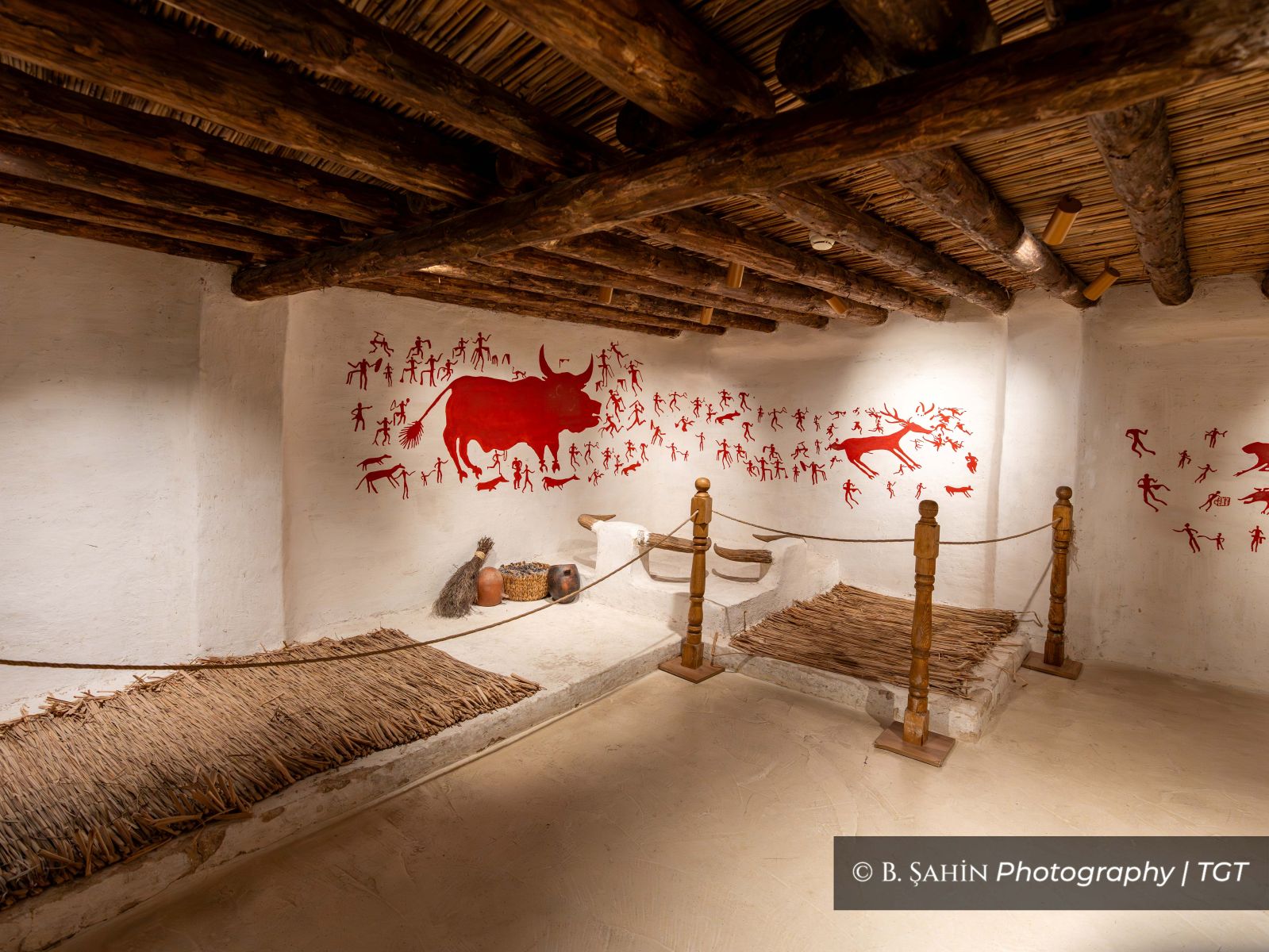
Reconstructed Çatalhöyük house interior showing red wall paintings of a bull and hunters, woven mats, and timber roof.
When visiting this unique archaeological site, the reconstructed Neolithic houses—which are a part of experimental archaeology—will help you visualize all of this much better. Furthermore, the Konya Archaeological Museum and the Museum of Anatolian Civilizations in Ankara, where many artifacts excavated from this site are exhibited, will provide you with a deeper insight into the daily life of Neolithic people.
Reference / Further Reading: Hodder, Ian. The Leopard's Tale: Revealing the Mysteries of Çatalhöyük. Thames & Hudson, 2006.